Genograms are useful for identifying family patterns of behavior, communication, trauma, and addiction. The potential for healing and understanding that comes from doing a family genogram is amazing. The process can feel like a lot of work for some clients, but the result can sometimes alter your worldview and how you see reconcile your nuclear family’s patterns with the circumstances of their own families. Issues like generational patterns of abuse and trauma can become clear as you literally draw the lines connecting you to your past.
Monica McGoldrick is the pioneer for genogram work and her textbook “The Genogram Casebook” (2016) is helpful in learning how to draw a genogram and how to interpret it with a client. It is important to note that although there are standard symbols for typical situations, there may be unique situations that are deeply impactful for the client that do not have an assigned symbol. It is important to validate the client’s experience by adding new symbols invented by the client to their genogram when needed.
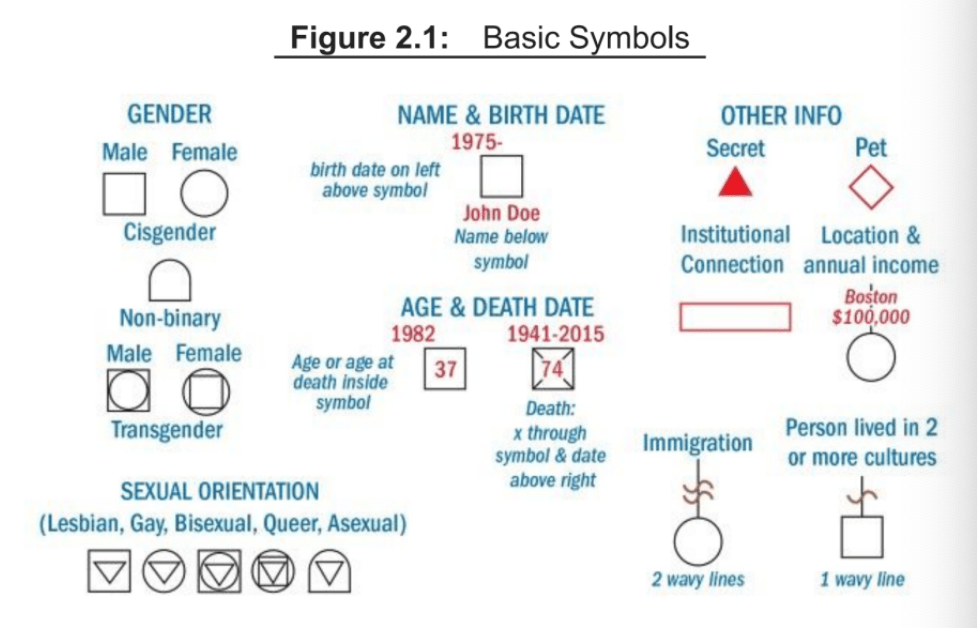
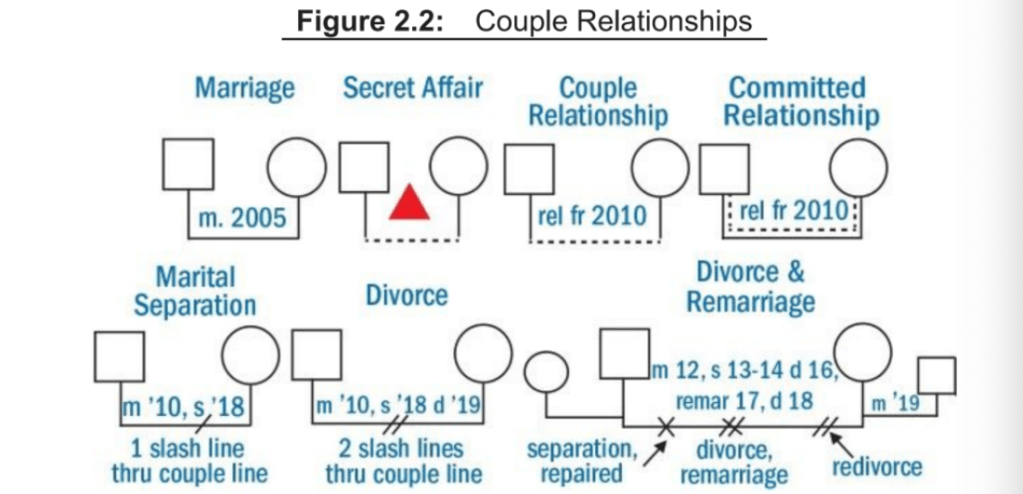
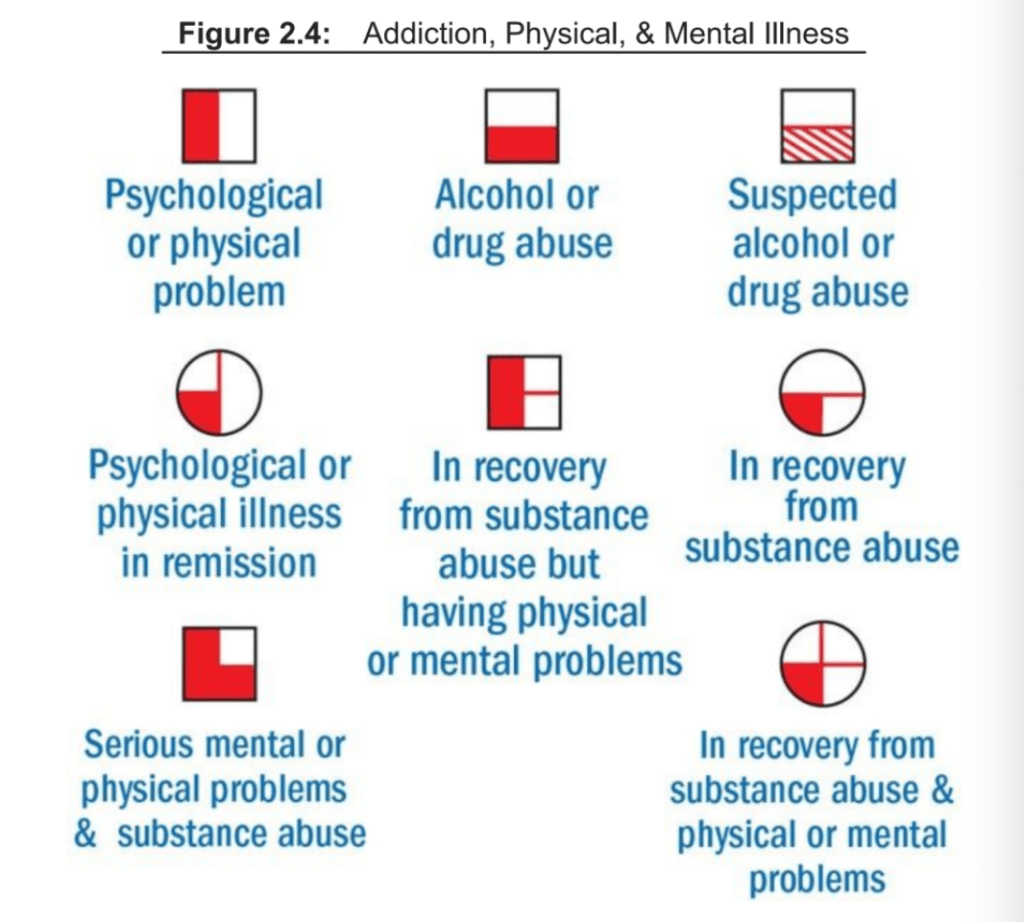
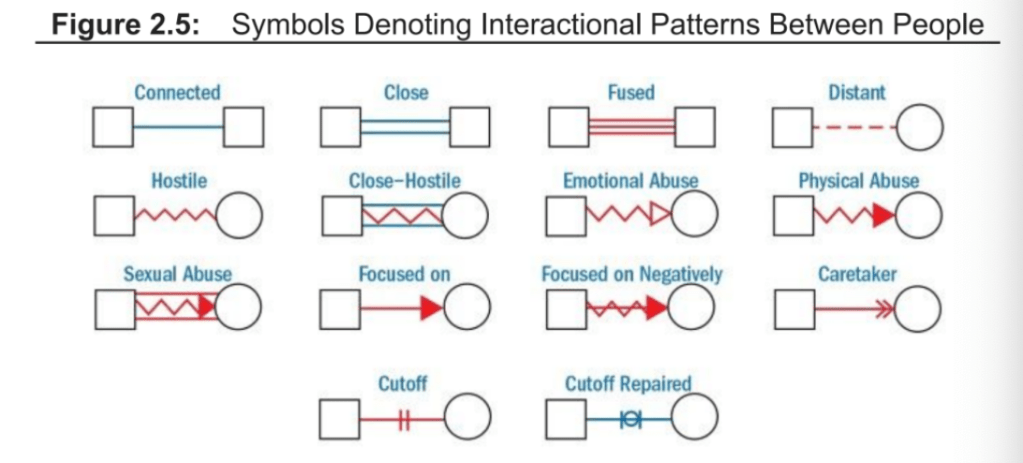
Examples and common symbols from Monica McGoldrick (2016) are shown below. They are also saved as one download on the downloads page.
Basic Symbols
Couple Relationships
Addiction, Physical Abuse, Substance Use, Physical Illness, and Mental Illness
Interactional Patterns
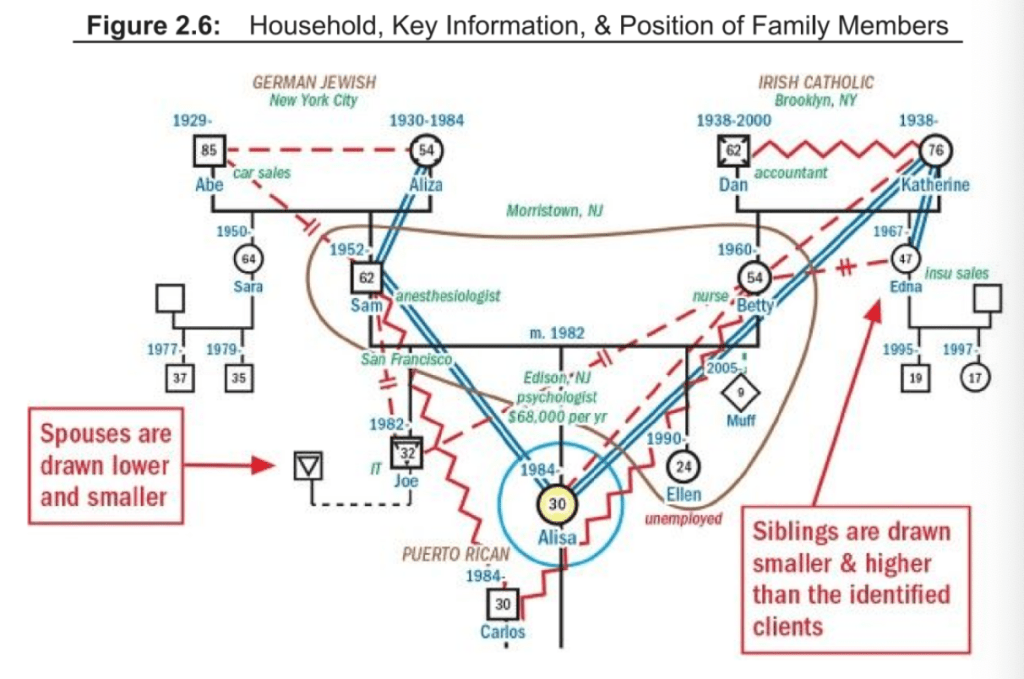
Genogram Example
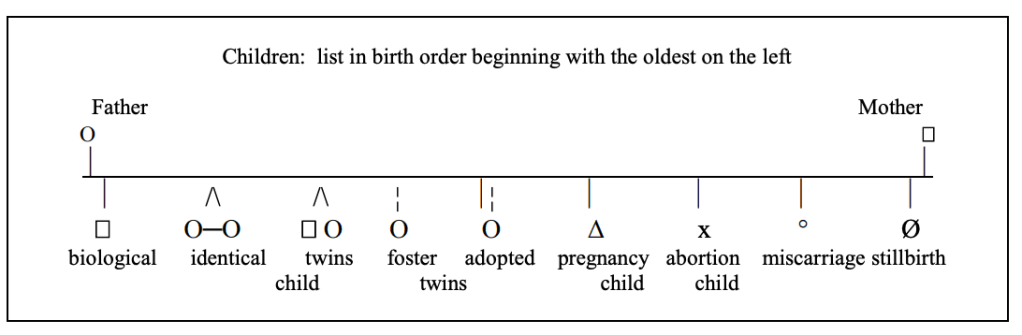
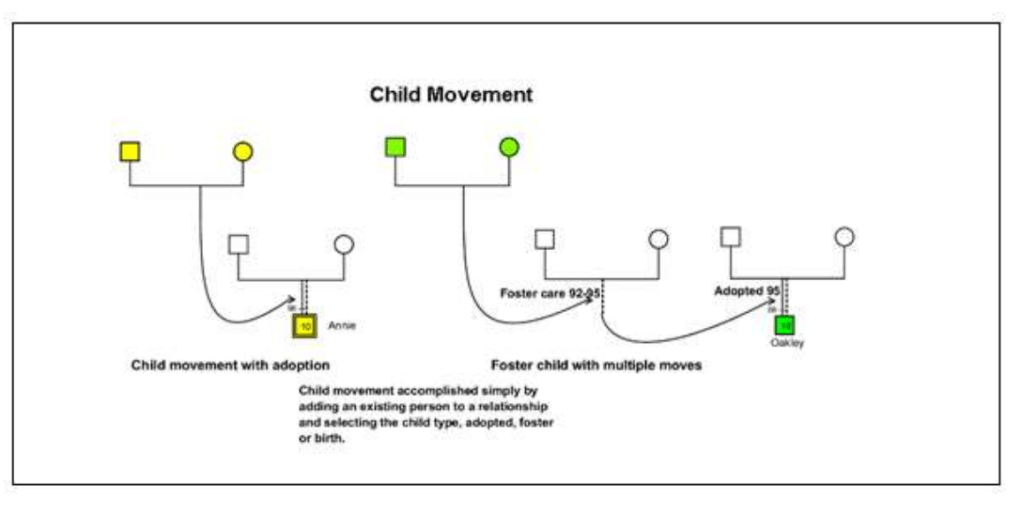
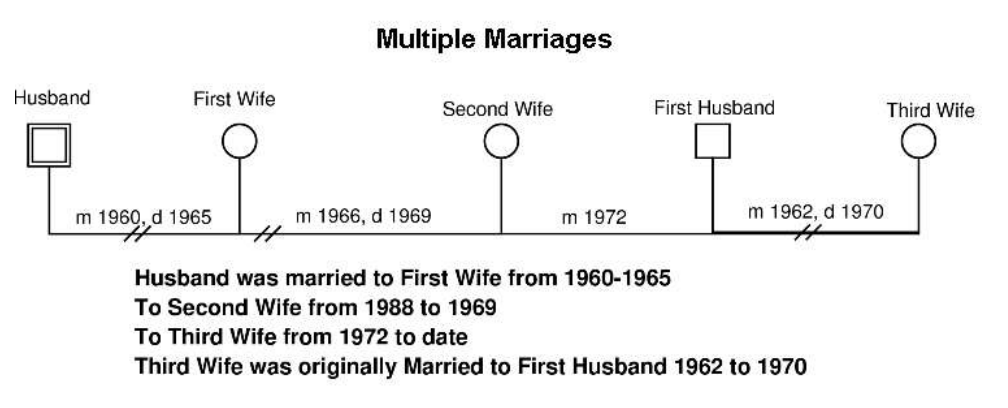
The State of Kansas Department for Children and Families Prevention and Protection Services (2020) has another useful document with more symbols involving children moving between homes and more complex family relationships. You can find it on the downloads page.
More Symbols for Children
Child Movement
Remarriage
Resources
Featured image from McGoldrick (2016).
McGoldrick, M. (2016). The genogram casebook: A clinical companion to genograms: Assessment and intervention. New York, NY: W.W. Norton & Company
State of Kansas. (2020). Basic Genogram Symbols. https://www.dcf.ks.gov/services/pps/documents/ppm_forms/appendices/appendix_3b.pdf


 Rookie Counseling
Leave a comment